AMD Introduces RX 7800 XT and RX 7700 XT Graphics Cards in a Battle Against RTX 4070 and 4060 Ti
AMD Unwraps the RX 7800 XT and RX 7700 XT Graphics Cards, Completing the RDNA 3 Lineup
AMD has officially revealed its latest additions to the RDNA 3 lineup, the RX 7800 XT and RX 7700 XT graphics cards. These cards mark the culmination of AMD’s efforts since their initial GPU announcement in November of last year. Engineered to cater to 1440p displays and deliver maximum settings, including ray tracing, at frame rates exceeding 60fps, they also incorporate AMD’s innovative frame generation technologies. We have covered these advancements in a separate article, having had a hands-on experience with FSR 3 and Fluid Motion Frames at Gamescom.
Both of these graphics cards utilize the new Navi 32 GPU. The RX 7800 XT boasts a fully-enabled 60CU version, featuring a 256-bit memory bus, 64MB of Infinity Cache, and 16GB of GDDR6 memory clocked at 19.5Gbps. On the other hand, the RX 7700 XT, while slightly scaled down, remains formidable. It employs a 54CU design with a 192-bit bus, 48MB of Infinity Cache, and 12GB of GDDR6 running at 18Gbps. Their TDP figures are also quite comparable at 245W and 263W, with the 7700 XT achieving higher clock speeds to compensate for its lower CU count.
AMD’s performance data showcases the RX 7800 XT competing head-to-head with the RTX 4070, while the RX 7700 XT convincingly takes on the RTX 4060 Ti. Both cards consistently achieve over 60fps at maximum settings in recent AAA titles, including The Last of Us Part 1, Star Wars Jedi: Survivor, Hogwarts Legacy, and Call of Duty: Modern Warfare 2. AMD highlights the 7800 XT’s leads against the RTX 4070, with up to a 23 percent advantage in titles like Modern Warfare 2, Cyberpunk 2077, and Hogwarts Legacy, while it lags by up to 18 percent in ray-tracing-enabled titles such as Dying Light 2, Marvel’s Spider-Man: Miles Morales, F1 23, and Doom Eternal. The 7700 XT shows more competitiveness, with a lead of up to 31 percent in MW2 and only a nine percent lag behind the 4060 Ti in Doom Eternal with ray tracing.
Read also : Affordable Uncapped 4G and 5G Data Plans: Unlocking Value in South Africa
Read also:How to Send money to anyone quickly and easily with Absa CashSend
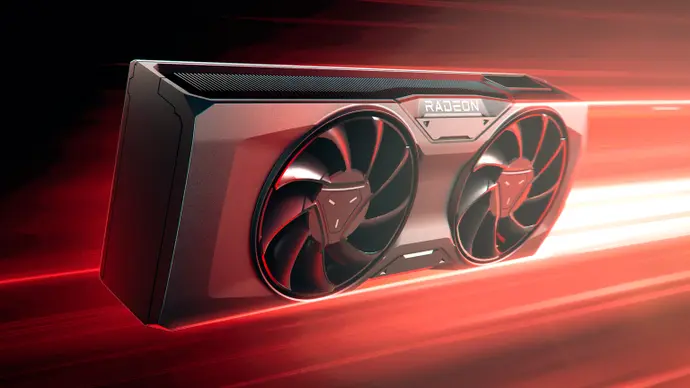
The RX 7800 XT is available in an AMD reference design with a dual-fan, dual-slot configuration, and it also comes in various third-party designs from partners like ASRock, Asus, Gigabyte, PowerColor, Sapphire, and XFX. The reference model boasts three DisplayPort 2.1 ports and one HDMI 2.1 port, requiring two eight-pin power inputs. Conversely, the RX 7700 XT is exclusively offered by third-party manufacturers, with no reference model available.
Both cards come equipped with noticeably more VRAM than their direct competitors, featuring 12GB on the 7700 XT and 16GB on the 7800 XT. This generous VRAM allocation positions them well against some recent titles known for their VRAM demands, especially those high-profile PC ports from the PS5. Notably, both of these new GPUs adopt the chiplet (‘MCM’) design, following the pattern of the 7900 XT and 7900 XTX. This design includes a 200mm² 5nm graphics compute die (GCD) and a 150mm² 6nm memory cache die (MCD), with transistor counts measuring 26.5B for the 7700 XT and 28.1B for the 7800 XT. In comparison, the monolithic die of the 7600 contains 13.3B transistors, while the Navi 31 MCM die of the 7900 XT and XTX features 57.7B transistors.
For content creators, AMD offers AV1 encoding/decoding, AMD noise suppression, and doubled performance in Stable Diffusion compared to the 6950 XT. The RX 7800 XT and 7700 XT are scheduled to launch on September 6th, available through the usual AMD GPU manufacturers. Coincidentally, this date aligns with the release of Starfield, and purchasers of these GPUs will also receive a copy of Starfield’s Premium Edition, emphasizing AMD’s association with Bethesda.
Naturally, thorough testing will be necessary to validate AMD’s performance claims for these new graphics cards. Stay tuned for updates and reviews.
| RDNA 3 GPUs | RX 7600 | RX 7700 XT | RX 7800 XT | RX 7900 XT |
|---|---|---|---|---|
| GPU | Navi 33 | Navi 32 | Navi 32 | Navi 31 |
| Compute units | 32 | 54 | 60 | 84 |
| Game clock | 2250MHz | 2171MHz | 2124MHz | 2000MHz |
| Boost clock | 2655MHz | 2544MHz | 2430MHz | 2400MHz |
| GDDR6 memory | 8GB | 12GB | 16GB | 20GB |
| Memory interface | 128-bit | 192-bit | 256-bit | 320-bit |
| Memory speed | 18Gbps | 18Gbps | 19.5Gbps | 20Gbps |
| Infinity Cache | 32MB | 48MB | 64MB | 80MB |
| TDP | 165W | 245W | 263W | 315W |
| US MSRP | $269 | $449 | $499 | $899 |
Source: Eurogamer
