
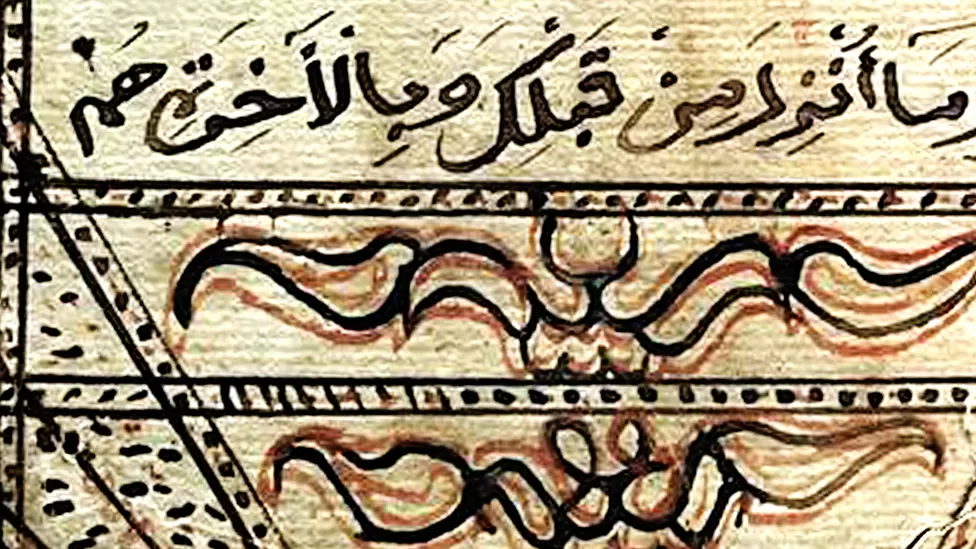
In the eyes of Tuan Guru’s biographer, Shafiq Morton, there is strong evidence to suggest that this esteemed scholar initiated the creation of the first of his five Quran copies while incarcerated on Robben Island. This notorious island, known for imprisoning anti-apartheid icon Nelson Mandela during the 1960s to the 1980s, potentially served as the birthplace of this significant endeavor, which continued even after his release.
Tuan Guru embarked on this monumental task during his twilight years, between the ages of 80 and 90. His achievement is all the more remarkable given that Arabic was not his native tongue.
According to Morton, Tuan Guru found himself imprisoned on Robben Island twice, first from 1780 to 1781 at the age of 69 and later from 1786 to 1791. Morton speculates that one of the motivating factors behind Tuan Guru’s Quranic transcription was to uplift the spirits of fellow enslaved individuals. He recognized that by creating a Quran copy, he could educate and instill a sense of dignity in his people.
When examining the archives, Morton notes striking similarities between the paper used by the Dutch colonial authorities and that employed by Tuan Guru, suggesting they might have used the same materials. Tuan Guru likely fashioned his own pens from bamboo and acquired black and red ink with relative ease from colonial authorities.
Shaykh Owaisi, a scholar specializing in South African Islamic history, emphasizes that Tuan Guru’s primary motivation was the preservation of Islam among Muslim prisoners and slaves in the Dutch colony of that era. While others sought to propagate the Bible and convert Muslim slaves, Tuan Guru labored diligently to transcribe copies of the Quran. He taught it to children and encouraged memorization, portraying a story of resilience and unwavering commitment. This dedication serves as a testament to the level of education among individuals brought to Cape Town as slaves and prisoners.
Tuan Guru’s literary contributions extended beyond Quranic transcription; he authored a 613-page Arabic textbook titled “Ma’rifat wal Iman wal Islam” (The Knowledge of Faith and Religion) from memory. This text served as a foundational guide to Islamic beliefs and was instrumental in educating Cape Town’s Muslim community for over a century.
Remarkably, this valuable tome remains in excellent condition and is safeguarded by the Rakiep family, descendants of Tuan Guru. A replica is also preserved in Cape Town’s national library.
Of the five Quran copies handwritten by Tuan Guru, three have been accounted for. Besides the one housed in the Auwal mosque, the other two are treasured by his family, including his great-great-granddaughter.
Approximately 100 replicas have been produced, with one presented to the library of the al-Aqsa mosque in Jerusalem, the third holiest site in Islam. Several others have been gifted to visiting dignitaries.
In May 2019, Ganief Hendricks, leader of the South African Muslim political party Al Jama’ah, was sworn in as a member of parliament using one of these replicas.
The Dutch authorities, in banishing Tuan Guru to southern Africa, unknowingly catalyzed the spread of Islam in this region. Today, Muslims constitute around 5% of Cape Town’s estimated population of 4.6 million.
Upon his arrival in Cape Town, Tuan Guru perceived the state of Islam as precarious and in need of restoration. His laborious efforts in transcribing the Quran and preserving the faith are credited with sustaining and cultivating the respected Muslim community that exists in Cape Town today.
source BBC
